
Street food is an essential part of Vietnam’s rich culinary landscape. Without stepping into upscale restaurants, visitors can enjoy authentic, flavorful local dishes right on the sidewalk, often seated on small plastic stools surrounded by the vibrant rhythm of daily life.
From major cities like Hanoi and Ho Chi Minh City to cultural hubs such as Hue, Hoi An, and Can Tho, street food is found in every corner—offering a lively, down-to-earth dining experience deeply rooted in Vietnamese culture.
2. Must-Try Vietnamese Street Foods
Below are some of the most popular Vietnamese street foods that international visitors should not miss:
- Phở (Pho): Vietnam’s iconic noodle soup made with rice noodles, aromatic broth, and thinly sliced beef or chicken. Hanoi-style pho features a clear, herb-infused broth with minimal seasoning.
- Bánh mì (Banh Mi): A fusion of French baguette and Vietnamese ingredients like pate, cold cuts, fresh herbs, and signature sauces. Ho Chi Minh City is renowned for its wide variety of bánh mì stalls.
- Bún chả: Grilled pork served with rice vermicelli, fresh herbs, and a dipping sauce made from fish sauce, lime, and sugar. A specialty of Hanoi.
- Gỏi cuốn (Fresh Spring Rolls): Made with rice paper and filled with shrimp, pork, vermicelli noodles, and herbs, served with sweet fish sauce or peanut dipping sauce.
- Bánh xèo (Vietnamese Pancake): A crispy, savory crepe filled with shrimp, pork, and bean sprouts. Southern and Central regions offer different versions, varying in size and crispiness.
3. Safety Tips for Enjoying Street Food
To enjoy Vietnam’s street food safely and fully, here are a few practical tips:
- Choose busy stalls: Popular with locals is often a good sign of both taste and hygiene.
- Check for cleanliness: Look for vendors who use gloves or tongs, and ensure that food is prepared in a clean environment.
- Opt for cooked foods: Avoid raw or undercooked items, especially seafood, to minimize the risk of foodborne illness.
- Bring tissues and hand sanitizer: Useful for maintaining personal hygiene while eating outdoors.
- Be cautious with ice: Drink bottled water and only consume ice from reliable, clean sources.
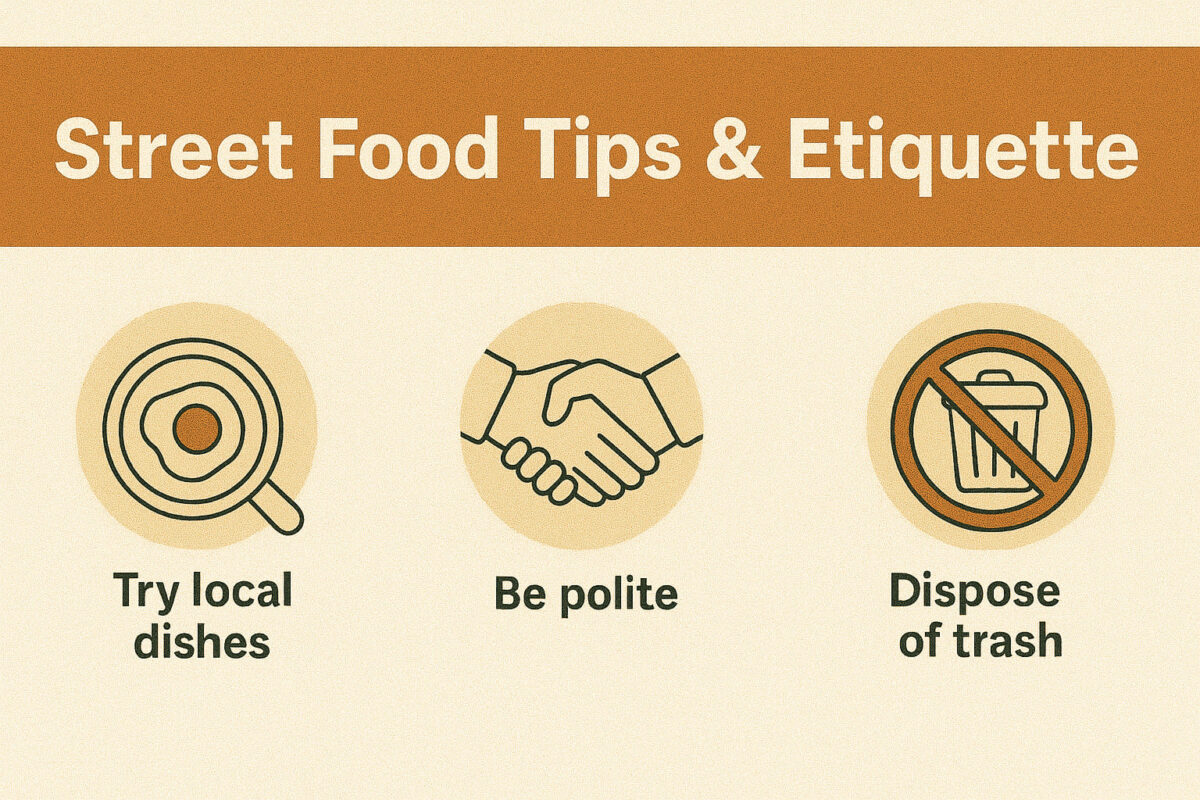
4. Etiquette at Street Food Stalls
Understanding local dining etiquette helps you enjoy your meal while showing respect to others:
- Ordering and paying: Order first, pay after the meal. Some places may ask about your drink order upon seating.
- Proper utensil use: Avoid sticking chopsticks upright in your bowl or tapping them on dishes.
- Sharing dishes: Vietnamese diners often order several dishes to share. Feel free to join in if you’re dining with a group.
- Be polite and considerate: Speak in a soft tone and avoid loud conversations or smoking in crowded areas.
5. Conclusion
Street food is an integral part of the Vietnamese cultural experience. With a bit of preparation and awareness, international travelers can safely explore the vibrant flavors and atmosphere of Vietnam’s street food scene.
From a bowl of pho at dawn to a freshly made bánh xèo in a bustling market, each dish offers a glimpse into Vietnam’s everyday life and culinary identity.
