
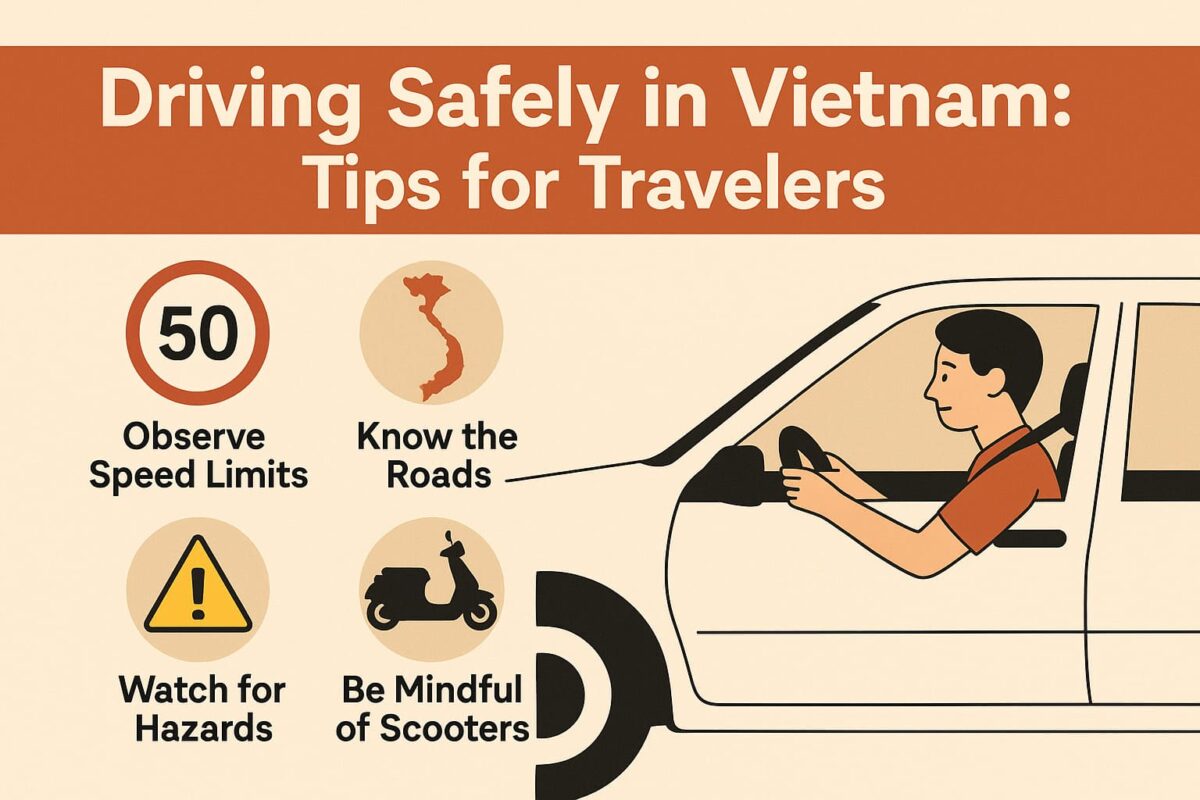
Vietnam is a captivating destination, offering a wide variety of natural landscapes and a rich cultural heritage. From the mountains of the north to the central coastlines, travelers can explore many locations by renting motorbikes or cars. However, Vietnam’s traffic system differs significantly from that of many other countries—particularly in terms of vehicle density and road etiquette.
This guide outlines important considerations and practical tips to help international travelers drive legally and safely during their journey in Vietnam.
🚗 1. Preparation Before Driving in Vietnam
Before operating any vehicle in Vietnam, travelers should ensure they meet all legal and safety requirements:
✔ International Driving Permit (IDP)
Travelers must carry a valid IDP in accordance with the 1968 Vienna Convention, along with their original national driver’s license. This combination is required for legal driving in Vietnam.
✔ Travel Insurance That Covers Driving
Some insurance providers only cover road accidents if the traveler holds a valid license and is legally permitted to operate the vehicle. It’s important to confirm this coverage in advance.
✔ Vehicle Inspection
Whether renting a motorbike or a car, check the brakes, lights, horn, tires, turn signals, and fuel level before starting your trip.
⚠️ 2. Basic Traffic Rules in Vietnam
Understanding and following local traffic laws is essential for your safety:
- Drive on the right-hand side: All vehicles in Vietnam drive on the right side of the road.
- Helmet required: Helmets must be worn when riding motorbikes or electric scooters. Only use helmets that meet safety standards.
- Speed limits:
- In urban areas: up to 25 mph (40 km/h)
- On highways and rural roads: up to 37 mph (60 km/h) depending on location
- No phone use while driving, unless using a hands-free device.
- Zero-tolerance alcohol policy: The legal blood alcohol limit is 0.00%. Any alcohol consumption before driving is prohibited.
🚦 3. Navigating Vietnamese Roads: Key Considerations
📍 Congested and chaotic traffic
Major cities like Hanoi and Ho Chi Minh City are known for heavy traffic, especially during rush hours (7:00–9:00 AM and 4:30–7:00 PM). It’s crucial to remain calm, drive slowly, and maintain awareness of your surroundings.
📍 Horn usage
Honking is commonly used in Vietnam to signal overtaking, turning, or alerting others of your presence. While frequent, honking should still be used respectfully and not excessively.
📍 Large vehicles
Always yield to trucks, buses, and other large vehicles. Maintain a safe following distance and avoid blind spots—these vehicles may not see smaller ones approaching from behind or the sides.
📍 Roundabouts
When entering a roundabout (traffic circle), yield to vehicles already inside the circle and watch carefully before merging into traffic.
🌍 4. Practical Insights from the Travel Community
Shared experiences from platforms such as Reddit, TripAdvisor, and Lonely Planet highlight several important points:
- High alertness and quick reflexes are essential, especially at intersections without traffic lights.
- Avoid driving at night unless absolutely necessary. Many roads lack proper lighting, and some vehicles may operate without headlights.
- Rain and stormy weather can make roads slippery, particularly in mountainous areas or along winding routes such as Hà Giang, Mộc Châu, or the Hải Vân Pass.
📌 5. Conclusion
Driving in Vietnam can offer a unique way to explore the country at your own pace, with opportunities to visit places less accessible by public transport. However, it also presents challenges for those unfamiliar with local traffic conditions.
By preparing the required documents, understanding the basic traffic rules, and maintaining a cautious approach, you can enjoy a safe and rewarding driving experience across Vietnam’s diverse landscapes.
